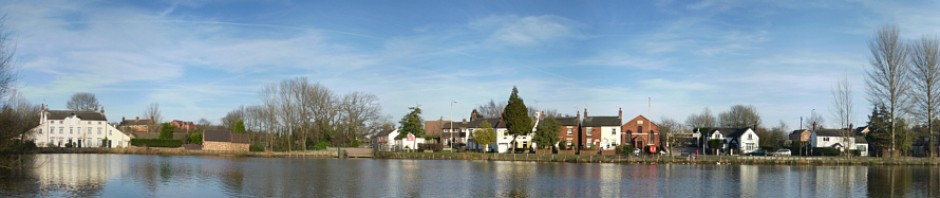
The Meadows Primary School
Newcastle Road
Madeley Heath
Cheshire
CW3 9JX
01782 750313

Note that the following information is given in good faith and is current as of November 2006 and shown for guidance only. Please confirm with the school any information that you require as this site can not be held responsible for any errors or oversights.
School Aims
Our Aims and Ethos
The school aims to create a love of learning and to provide each pupil with the opportunity to develop fully his/her learning potential. This will be achieved through:
- A commitment to a professional partnership between parents and school
- Providing high standards in teaching and learning
- The effective use of all resources
- A commitment to life-long learning and professional development by all staff
- An environment where mutual caring, sharing and respect are encouraged
Our school is committed to working towards the 5 outcomes of the Every Child Matters agenda:
- Being healthy
- Staying safe
- Enjoying and achieving
- Making a positive contribution
- Economic well-being
Further information about the management of the school, its policies and schemes of work are located in the Headteacher’s office. You are welcome to come and read, borrow or discuss these documents with the Headteacher.
Headteacher – Mrs C. Henson
Deputy Headteacher – Mrs S. Williams
Teaching Staff
Reception – Mrs S. Hegarty
Year One and Two – Miss C. Jeffries
Year Three and Four – Mrs S. Williams
Year Five and Six – Miss A. Monir/Mrs C. HensonNon-Teaching Staff
School Secretary – Mrs C. Fullwood
Administrative Assistant – Miss C. PoundTeaching Assistants
Miss C. Brayford
Mrs S. Hedley
Miss B. Jackson
Miss C. PoundCatering Supervisor – Mrs J. Payne
Assistant Supervisor – Mrs J. CooperMidday Supervisors
Miss C. Brayford
Mrs M. Brayford
Miss C. Pound
Mrs L DownsSite Manager – Mr K. Hayward
Crossing Patrol – Mr B. Panter

Headteacher – Mrs C. Henson
Chairperson – Mr W.Welsh
Clerk – Ms G. Nunnick
Parent Governors – Mr K. Clarke – Mrs L Ham – Mrs J. Young
Teacher Governor – Miss A. Monir
Local Authority – Mr A. Deeming – Mr T. Liversage
Co-Opted Governors – Mrs J. Leech
Each non-teaching governor has two or three curriculum link areas and works closely with the teachers, who are curriculum co-ordinators.
Governors are no longer required to send an annual report to Parents. This is being replaced by a School Profile, which will be available online.
A contact number for the Chairperson is kept in the school.
General Information and School Organisation
General Information
The Meadows Primary School is a community school admitting children from rising 5 to 11 years old and coming under the overall control of Staffordshire County Council Education Committee. We have a published admission number of 14 which means that classes are generally small and on average have 22 pupils. We have 4 mixed-aged classes: Reception, Year 1/2, Year 3/4 and Year 5/6.
The curriculum is organised on a two-year rolling programme to avoid any repetition. Naturally, work is differentiated to ensure that children are working at the right level and receiving the support and challenge that they need. Children from Key Stage 1 and 2 mix smoothly together, sharing assemblies. We encourage the older children to help younger children at break times and lunchtimes.
The school has a well-stocked library and a bank of laptop computers, which are timetabled for use across the school. We use the hall at Sir John Off ley School for indoor PE (the LEA provides transport there and back) and a nearby playing field for outdoor PE and Sports Day. Large end of term productions are performed at Madeley High School or Madeley Village Hall.
A Before and After School Club operates in the library and is run by Roosters Day Nursery.
School Roll
In January 2006 the school had 73 pupils on roll.
Morning session 8.55 a.m. – 12.15 p.m. (12.00 for Classes 1 and 2)
Afternoon session 1,15 p.m. – 3.30 p.m.
Attendance Regulations
The Department for Education and Skills has tight procedures regarding school attendance. We have been required to make a target of 4% authorised absence for the year 2006.
If your child is absent from school, would you please follow these procedure:
- Inform the school of the reason by telephone, on the first day
- When your child returns to school, send a note stating clearly the reason for absence.
Prolonged and repeated absences will be followed up by the Educational Welfare Officer, since these seriously effect the education of the child.
Please also ensure that your child arrives at school punctually, but not before 8.45 a.m. when teacher supervision is provided. Registration is taken at 9.00 a.m. and 1.15 p.m. Pupils are expected to be on time and those arriving after these times will receive a late mark. Should your child arrive late, he/she should report to the school office to register the lateness with the school secretary.
Holidays inside the school term are discouraged. If however, circumstances are such that there is no alternative, please make an application for leave of absence to the Headteacher, via the school office. Parents and Carers will be asked to make out a case for removing children from school. Each case will be considered on its own merits.
Assessment
Please note that important testing and assessment takes place between March and the end of June. It is important, therefore, that your child’s attendance during this period is as continuous as possible.
Please avoid these dates when booking holidays.
2004-5
Number on roll 78
Authorised Absence 5.4%
Unauthorised Absence 0%
2005-6
Target for absence 4%
All children at The Meadows are expected to wear School Uniform, which is readily available at Clive Marks or Smarts in Newcastle-under-Lyme.
If the provision of uniform causes difficulties, please contact the Head Teacher. We do have some second-hand uniform in excellent condition.
Uniform comprises:
Green sweatshirt with school logo
Gold polo shirt with school logo
Grey trousers/skirt/pinafore
Grey/white socks
Grey/white/green tights
Black shoes
Summer:
Green and white dress
Grey shorts/trousers
Gold polo shirt with school logo
P.E.
School T-shirt
Black shorts/jogging trousers for cold days
Trainers
Swimming kit in small bag
Please label all uniform, as our lost property box is full!
- Children must not wear jewellery to school, it may get lost and we cannot accept responsibility. More importantly, it can be very dangerous when children play games. The only exception to this rule is for children with pierced ears but we ask that they wear plain studs, which must be removed by the child his/herself for PE.
- Make-up, including nail polish, is not acceptable in school.
- School uniform can be varied due to health or religious grounds in consultation with the Headteacher.
Most people bring their children on foot, but should you need to arrive by car, please park at the front of the school on Newcastle Road, avoiding the zigzag yellow lines.
Food in School – We believe in Keeping Healthy!
Toast and a cold or hot drink (according to season) are available for a small cost at morning break. Alternatively children may bring their own healthy snack, such as a piece of fruit or a cereal bar. In Key Stage 1 children receive a free piece of fruit in the afternoon.
All children are encouraged to drink plain water and may bring in a bottle with sports top to fill from the cooled water machine. There is considerable evidence to suggest that children who drink plenty feel and think better!
At lunchtime, children may have a meal provided by the school catering service at the current cost or bring a packed lunch. If you are receiving Family Income Support your child is entitled to free school meals. Please enquire at the office for details. Even if you do not wish to take up this option, please let the school know of your entitlement, as this will affect the school’s budget and expected test results.
Dinner money is collected on a Monday morning for the complete week. Cheques are simpler to manage and should be made payable to The Meadows Primary School’. Children are given the opportunity to order the meal of their choice the day before.
Packed Lunches
We ask that parents provide a healthy and balanced content to their child’s lunch. Fizzy drinks and glass bottles are not allowed.
Visitors
We encourage a range of outside visitors to share their expertise and knowledge with the
children. These include: road safety officers, children’s librarians, drama, writing and music
groups, local police, fire-fighters etc.
Charging
The curriculum of Local Education Authority schools is, in the main, provided by finance from Central Government and the Local Authority. Unfortunately, certain activities within the curriculum e.g. outings, school journeys and clubs, are only possible if the school asks parents to pay the whole or partial cost.
Although there is no obligation to contribute, school visits cannot realistically go ahead if funds fall far short of the total cost. The PTFA make regular payments to offset high costs and to make visits affordable.
Contacting the School
We have already mentioned the high priority the school places on effective two-way communication between home and school. Parents are welcome, at any time, to get in touch with either the class teacher or with the Headteacher, if they are at all worried about anything to do with their child or school. The school has an ‘open door policy’ which means you are welcome to pop in to chat to your child’s teacher after school. Please, only come into the classroom in the morning for very important issues, as teachers are busy, setting up for the day’s lessons.
The Headteacher or Deputy Headteacher is also available on the playground each morning from 8.45-8.55.pm. and most days after school. They will be happy to make an appointment for a longer consultation with you, as necessary.

Please do not ‘sit’ on your worries, do come and discuss them.
Parents are invited to consultation evenings at the beginning and end of the school year to review their child’s progress. They are also invited to attend end of term productions and special assemblies.
Parental help and involvement in school is very much welcomed and valued. They can assist in a variety of ways such as sharing reading, putting up displays, helping with the library, assisting with cooking, school visits, football and netball coaching – the list goes on!
If you think you might like to help, please call in.
The Parent Teacher and Friends Association (PTFA)
We are fortunate to have an active group of parents who devote time, promoting fund-raising and social events for parents and children throughout each school year. We meet in School on the second Wednesday of each month at 7.30pm. A committee is elected each year at the Annual General Meeting.
Volunteers to help are always welcome – come and join our friendly group.
Early Years
The Early Years curriculum is planned within six areas of learning:
Personal and Social Development
Language and Literacy
Mathematics
Knowledge and Understanding of the World
Physical Development
Creative Development
There are many learning opportunities for children through first hand experiences and play. We aim to give each child a positive start that will benefit the whole of their future development.
In a creative curriculum, as encouraged by the Primary Strategy, curriculum subjects are integrated and linked where possible, within broad topic themes. These encompass the core curriculum subjects:
English Mathematics
Science
Religious Education
Information and Communication Technology (ICT)
English/Literacy
A carefully prepared programme of reading and language development is used throughout the school following the guidelines of the National Literacy Strategy.
A wide variety of reading books, based mainly on the Oxford Reading Tree scheme, is used so that children have experience of many different types of reading material. They are encouraged to bring books home to share with adults. The library has a range of fiction and non-fiction books for children to borrow.
We attach the utmost importance to all aspects of English including grammar, handwriting, spelling, factual and creative writing, drama and poetry. Speaking and listening are also important elements of the National Curriculum and children are given ample opportunity to develop these skills.

Mathematics/Numeracy
In mathematics, all children are introduced to a wide variety of experiences through work of a practical and investigative nature. As the children progress in competence they become more proficient in mental and written work, applying the mathematical concepts they have gained, to solve problems.
The school follows the Collins scheme, supplemented by other resources.
Science
In the primary school, science is concerned with observing and examining our environment, interpreting evidence, investigating and testing simple hypotheses. ; The children follow the structured 6inn Star Science scheme, which involves a mixture of practical and written activities.
Religious Education
Religious Education is taught as directed under the terms of the 1988 Education Reform Act and in accordance with the Staffordshire Syllabus for Religious Education. Daily assemblies are of a broadly Christian nature. Although festivals from other cultures and religions are also discussed so that children develop an awareness and respect for others and their way of life.
Parents have the right to withdraw their children from assemblies and part of the religious education – no reason has to be given. The Headteacher is always happy to discuss any concerns.
Information and Communication Technology (ICT)

Children in Class 4 work on our bank of new laptop computers. The Meadows is well equipped with computers. All classes have broadband Internet connection and a standalone machine. Classes 2-4 have a digital projector and laptop. All children have access to our mobile laptop computer suite.
The school is committed to embedding the use of ICT into all curriculum areas from Reception age upwards. Pupils are also taught basic computer skills, such as how to use and search the Internet, word processing, spreadsheets and : presentations.
The School has an Internet Policy to ensure appropriate use of the computer. We access the Internet through the Staffordshire Learning Net, which filters information for children’s use.
Foundation Subjects
The topic themes tend to come more readily from the foundation subjects:
Geography and History
Individual units change termly on a two-year rolling programme. Fieldwork visits are considered to be an essential part of our humanities programme and all pupils are encouraged to participate in day and residential visits.
Art
Children have the opportunity to explore a wide variety of media and materials, to study and practise drawing and painting methods and techniques. They work with imaginative and observational stimuli. We regard the display of children’s work as very important and try to ensure that the school always looks aesthetically pleasing.
Physical Education
All children are given the opportunity to develop skills and confidence in Physical Education activities. Gymnastics, movement, dance and outdoor games are covered by all children. A range of team games are played. Older children can represent the school in local football and netball matches.
Key Stage 2 children have swimming lessons in the Autumn Term at Newcastle Community School and participate in a Summer swimming gala, organised by the local cluster of small schools.
Design Technology
Throughout the school children are taught to design, make and evaluate products and models, using a variety of tools and materials.
French
French is taught as a modern foreign language in all classes. The emphasis is on speaking and listening, including drama.
Music
Music plays an increasingly important part in the life of the school. In addition to music lessons, children can have tuition by County peripatetic music teachers, in an instrument of their choice, at a small cost. Instruments are lent to children for a period of time until they decide that they enjoy learning that particular instrument and wish to buy their own. The Headteacher will be happy to give you further information about this scheme. There is an optional recorder club and choir held at lunchtimes.
Sex and Relationship Education
Although biological reproduction is covered as part of the science syllabus, a more specific programme of sex education is delivered for Year 5 and 6 children by the school nurse. This deals sensitively and sympathetically with the physical and emotional aspects of puberty and relationships.
Parents are notified of the detail in content of this programme and are encouraged to share in this important part of their child’s development.
Parents have a right to withdraw their children from all or any part of a Sex Education Programme, except that which forms part of the National Curriculum. Please speak to the Headteacher.
Special Educational Needs and Disability Provision
A key principle, which underpins the ethos of the school, is that all children are valued and are entitled to equality of educational opportunity. This means that all children’s needs are regarded as special and that children with learning difficulties will be addressed naturally within the context of the school’s learning policy.
- Procedures for assessing individual learning needs are documented in the school’s Special Needs Policy which is available on request.
- Teachers and the Special Educational Needs Coordinator draw up Individual Educational Programmes (lEPs) for children on the special needs register biannually, which they discuss with parents and children. Learning targets are written in a language which the child can understand.
- External support agencies and services may be called upon to assist with particular learning needs.
- Children work in small groups with a Teaching Assistant, to help them to access the curriculum and to achieve their targets.
- The school is accessible by ramps to the main door and Reception classroom. Indoor steps are negotiable by removable ramps. At present there are no disabled toilet facilities.
All children are encouraged to complete homework tasks, although these will vary in complexity according to the age of the child.
Initially this will involve the sharing of reading books with parents and carers. As children progress through the school, a range of homework tasks will be set including spelling lists, maths and English assignments. A copy of the Homework Policy is available from the Headteacher and letters are sent out annually by class teachers to explain individual homework patterns.
After school clubs operate throughout the year. These are:
Football/netball – according to season
Art and Craft
Science
Cookery
Drama
Recorders
Choir
Our Behaviour Policy and Pastoral Care
Behaviour Policy
We believe that positive and desirable behaviour for the whole school comes from valuing the worth of everyone in the community.
Children, parents and staff have been consulted in the drawing up of our behaviour policy and the development of our value system, so there is a shared expectation with regard to what constitutes appropriate behaviour. Formal rules are kept to a minimum and each year children re-negotiate a set of class rules with their new teacher. Children are expected to co-operate and behave in a sensible manner; to show concern and respect for each other and the environment. We believe that a reasonable but unmoving framework of discipline provides security for each child.
Rewards
A merit system operates at The Meadows School. This is where children can gain team points or a Headteacher’s award for achievement, effort or good citizenship. Awards are made on Fridays at a special Celebrations Assembly. Awards are also made at the end of the year Leavers’ Assembly.
This is a powerful way of encouraging positive approaches to learning and good behaviour.
Health
The school nurse or Health Service undertakes periodic medical and dental examinations in the school. Please let the Headteacher know of any health-related issues, such as asthma or allergy to nuts, which affect your child.
Medicine
For reasons of health and safety, we are unable to administer medicines to children during the school day. The exception is for children with asthma; named inhalers will be kept in the teacher’s desk or, in the case of older children, in their trays. However if children need medication during the day, parents may come into school to administer medicines themselves at any time.
If your child has a sickness bug, please ensure that a period of 24 hours without sickness elapses, before sending him/her back to school. This will help to contain the spread of such illnesses.
- If your child becomes unwell at school and is clearly unable to stay, we will always contact you. Please ensure that all emergency contacts and changes in telephone numbers are kept up to date.
Infectious Diseases
Rubella (German measles) – please inform the school immediately if your child contracts German measles, as mothers of pupils should be told of the occurrence and are advised to consult a doctor if they are pregnant. Any rash you are not sure about should be seen by a doctor.
Head Lice
This is a very common occurrence and nothing to feel embarrassed about. Head lice prefer clean hair! Do let the school know so that we can ask all parents to check their children’s hair. We have leaflets offering advice on what to do about this persistent problem.
Child Protection
The school works in partnership with parents to support children in every way possible. However, the Children’s Act 2004 places a clear responsibility on schools to ensure that they work together with other agencies to safeguard and promote the welfare of all children. As a result, if concerns are raised within school or a child or parent reports a situation involving possible abuse, it would have to be referred to Social Services in accordance with Government and Local Education Authority Policy.

Admissions Policy and Secondary Transfer
Admissions
Children are admitted into the Reception Class in the September of the academic year in which they have their 5th birthday. We have an annual admission number of 14.
If the number of pupils seeking admission to the school exceeds the number of places available, then the following order of priority will be used:
a) Pupils living within the catchment area of the school;
b) Pupils, who have an elder brother or sister in attendance at the school in the year of admission;
c) Pupils who satisfy both of the following tests:i) they are distinguished from the majority of other applicants either on medical grounds, which are supported by a medical report, obtained by parents, specifying the medical advantage of the child attending the preferred school compared with the normal catchment area school or by other exceptional circumstances material to the choice of school (i.e. the circumstances of the child, not the economic or social circumstances of
the parent);and
ii) they would suffer hardship if they were unable to attend the school.
d) Other pupils arranged in order of priority according to how near their home addresses
are to the school, measurements being by the nearest walking route.
Parents who are considering an application to the school should make an appointment to see the Headteacher, who will show them around the school and answer any questions.
Secondary Transfer
All pupils transfer to secondary school at the end of Year Six. Strong links between primary and secondary school are encouraged. Usually, children transfer to Madeley High School. To make this transition easier, there are a range of joint activities during the year, culminating in spending two days at the High School during the Summer term, in order to get to know their new environment.
Complaints procedure
Complaints
Whilst we would hope to make educational provision which will satisfy all the needs of the parents and pupils, occasions may arise where a parent may wish to register a complaint related to the school. Within this procedure there are three stages at which a complaint may be dealt with:
Stage 1
It would be hoped that most complaints, or potential complaints, would be dealt with at this stage through discussion with the Headteacher or member of staff in an informal wayStage 2
Should a complaint fail to be resolved at Stage 1, a formal complaint in writing would be submitted to the governing body for their consideration.Stage 3
Should a complaint fail to be resolved at Stage 2, or if the subject of complaint is solely the responsibility of the Local Education Authority, then a formal complaint may be made to the Clerk to the Governors who will forward it to the relevant department of the Education Committee.
2005
Key Stage 2
These tables show the percentage of Year 6 children achieving each level in the school in 2005.
There were 10 children in year 6, 9 of whom were eligible to take the tests.
| Teacher Assessment | |||||
| Percentage at each level | |||||
| 2 | 3 | 4 | 5 | Pupils absent | |
| English | 10 | 0 | 90 | 0 | 0 |
| Speaking and Listening | 0 | 10 | 90 | 0 | 0 |
| Reading | 10 | 0 | 40 | 50 | 0 |
| Writing | 10 | 10 | 70 | 10 | 0 |
| Mathematics | 10 | 50 | 20 | 20 | 0 |
| Science | 10 | 20 | 50 | 20 | 0 |
| Test | ||||||
| Percentage at each level | ||||||
| 2 | 3 | 4 | 5 | Pupils disapplied | Pupils absent | |
| English | 10 | 0 | 60 | 30 | 1 | 0 |
| Reading | 10 | 0 | 20 | 70 | 1 | 0 |
| Writing | 10 | 10 | 60 | 20 | 1 | 0 |
| Mathematics | 20 | 40 | 20 | 20 | 1 | 0 |
| Science | 10 | 0 | 50 | 40 | 1 | 0 |
Key Stage 1
| Teacher Assessment | ||||||
| Percentage at each level | ||||||
| W | 1 | 2c | 2b | 2a | 3 | |
| English | - | - | - | - | - | - |
| Speaking and Listening | 9 | 18 | 0* | 45 | 0* | 27 |
| Reading | 9 | 9 | 9 | 9 | 36 | 27 |
| Writing | 9 | 18 | 0 | 45 | 9 | 18 |
| Mathematics | 9 | 9 | 9 | 36 | 9 | 27 |
| Science | 9 | 18 | 0 | 55 | 0 | 18 |
*Marks for speaking, listening and science are given as whole level scores, i.e. 1, 2 or 3 and are not subdivided.